On writing
The Subway Suicides:
A Story I Forgot I'd Invented
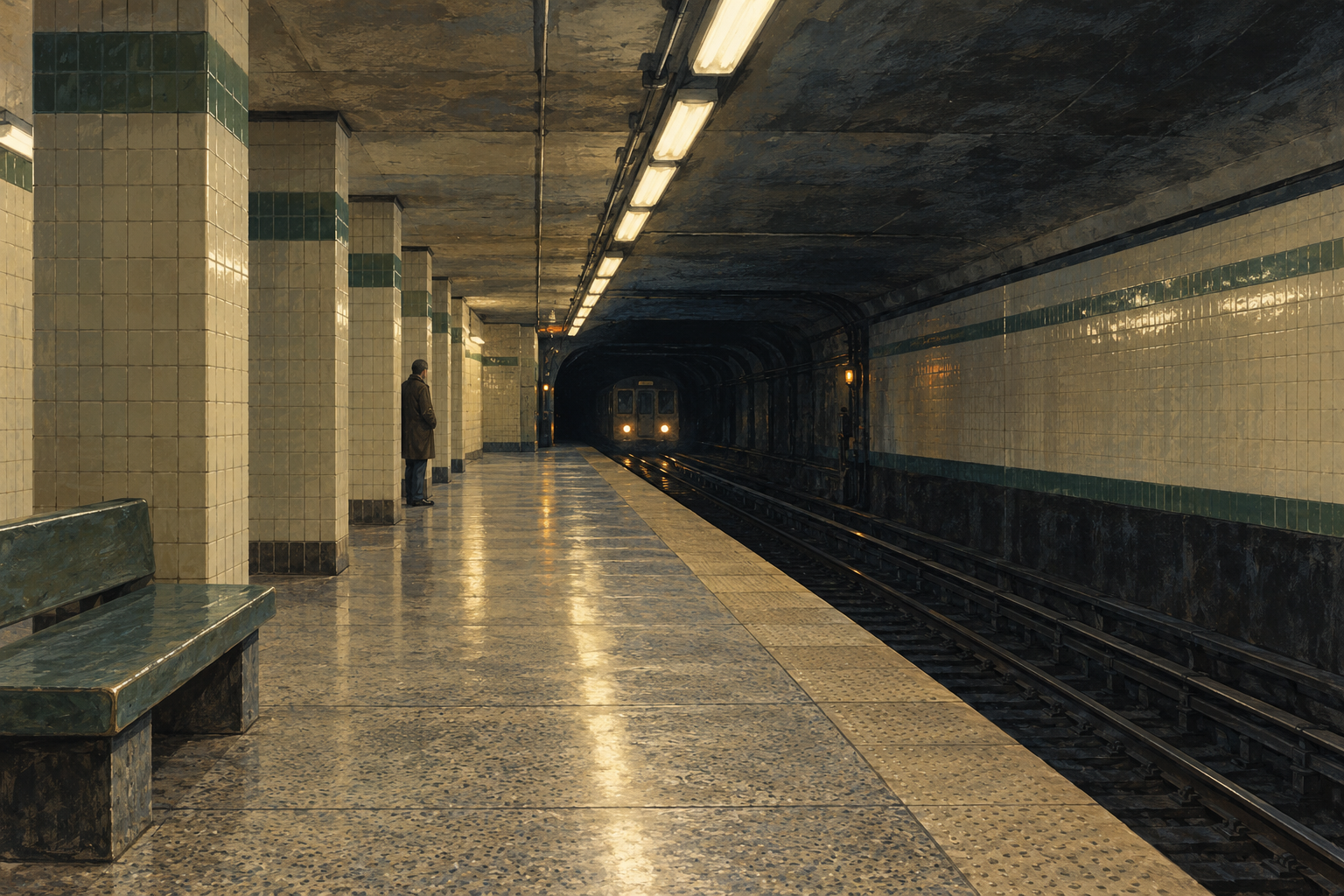
When I was about 13 or 14, growing up in Toronto, I heard an urban legend about the TTC. According to the legend, if a subway driver got three jumpers on his route, he'd receive his full salary for the rest of his life and could retire.
I remember joking with a school friend that it would make a darkly funny short story. What if a subway driver became so desperate to retire that he started devising ways to encourage people to jump in front of his train?
Macabre, I know, but we were 13.
I never wrote the story. I wasn't a writer in those days, and eventually I forgot about the whole thing.
Decades later, shortly after I'd finished writing Meeks, I was corresponding with that same childhood friend. He remarked that I'd always been a good storyteller and asked whether I remembered the story I'd once wanted to write about the TTC subway driver and the jumpers.
I'd completely forgotten about it until he reminded me.
I found it amusing that a throwaway idea from my early teens had stayed with him all those years. We had a laugh about it, and that was that.
But when I eventually began writing The Ranleigh Tapes and needed a short story supposedly written by nine-year-old Ranleigh Meeks, I knew exactly what I was going to use.
I called it The Subway Suicides.
In the novella, Ranleigh's teacher, Mrs. Hardacre, is appalled by the story. His school report card describes the subject matter as disturbing and wholly inappropriate for a school assignment.
And then readers get to see the story for themselves.
The challenge was writing it as a nine-year-old. I spent a considerable amount of time trying to get that right.
Children don't necessarily tell stories the way adults do. They can introduce an idea, explain part of it and then move on without carrying the thought through. I wanted to capture that while still telling a coherent story.
I also think children focus on details that adults might overlook. Part of that comes from having less life experience. They don't always recognize which details are important to the story and which aren't.
In The Subway Suicides, for example, the driver remembers hitting a dog while travelling to Barrie with his wife. It's a peculiar thing to dwell on, considering everything else happening, but I thought it was exactly the sort of detail a nine-year-old might latch onto.
And then there was the ending.
I remember doing writing assignments as a kid. You'd reach the required length, or decide you'd written enough, and that was it. You ended the story. No elaborate conclusion, no tying up every loose end.
So after some fairly disturbing events, Ranleigh concludes:
"He went back to his life and drove the train until he retired.
THE END"
I was particularly pleased with that ending. It took a fair bit of effort to write something that seemed as though a nine-year-old had simply decided he'd had enough and finished his homework.
Looking back, there's something familiar about how the whole thing came about.
I first had the idea for Meeks when I was around 20. I carried it with me for roughly 30 years before finally sitting down to write the novel.
With The Subway Suicides, I had the idea even earlier, forgot about it completely, and only rediscovered it because an old friend happened to remember a conversation we'd had as teenagers.
Two ideas from my youth, both eventually finding their way into Ranleigh Meeks's story decades later.
The difference is that I never forgot about Meeks.
I'd completely forgotten about the subway driver.