On writing
How Toronto Found
Its Way Into Meeks
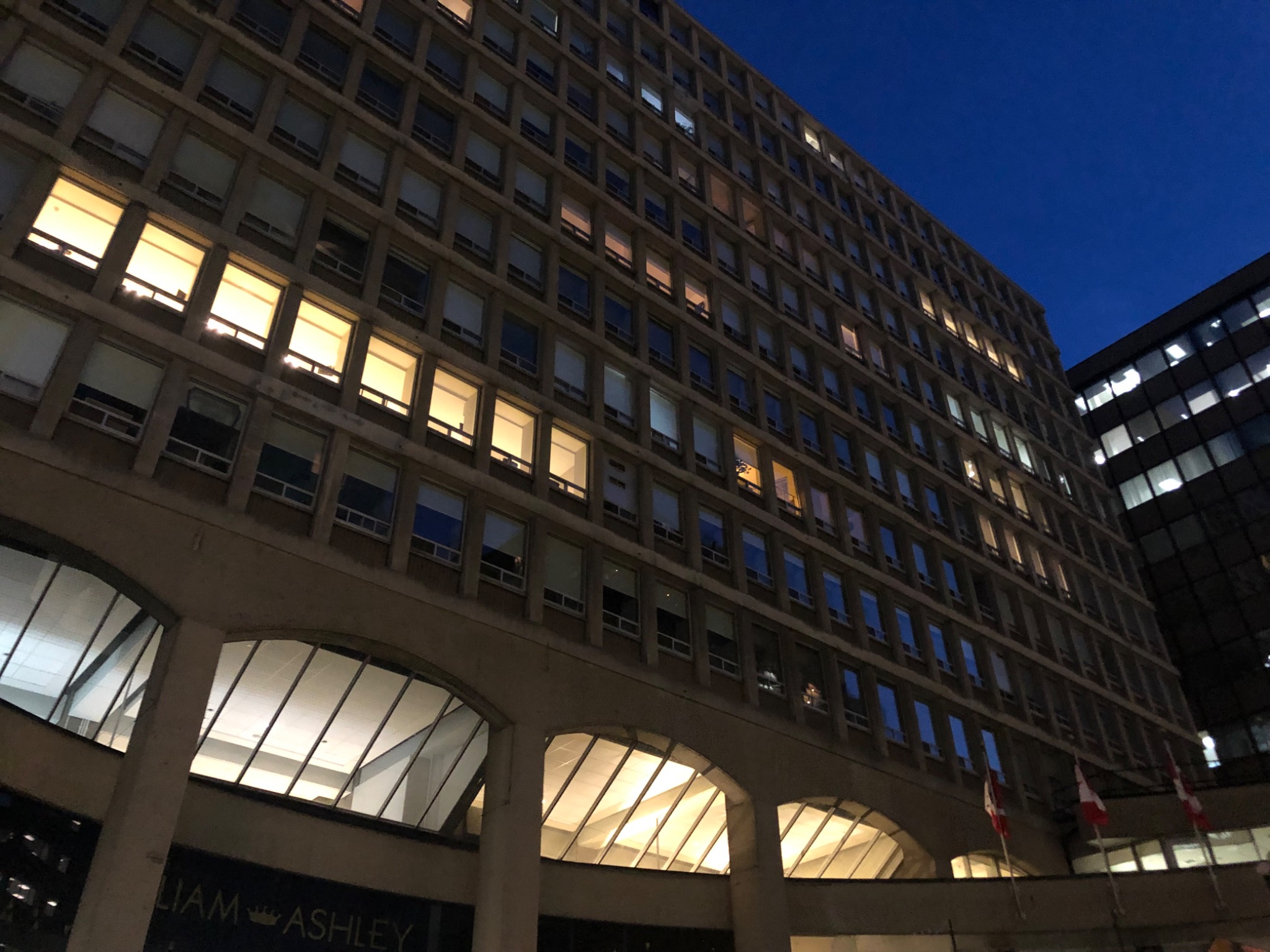
When I first came up with the idea for Meeks, Toronto wasn't part of the plan. In fact, Canada wasn't part of the plan.
The original working title was The Desert, and I had what I thought was a pretty good story idea, with a strong hook and a pivot that I'd been carrying around in my head since I was about 20.
When I finally started writing the book, I decided to set it in the United States.
I think, like a lot of Canadians, or maybe just me at the time, I had a slightly embarrassed relationship with Canadian culture. Our television, our movies, our arts scene. It always seemed that whenever somebody became particularly successful, they packed up and moved to the United States.
And I wanted Meeks to be successful. So I figured setting it in America was probably the way to go.
The prairie sequences were originally set in Arizona, of all places. I'd never been to Arizona. I also had an American city in mind for the urban portions of the story. I can't remember which one now. It might have been Boston.
I'd been to Boston once, but was only there for a one-day stopover. Hardly enough time to assimilate an entire city well enough to write about it.
So there I was, trying to write a novel set in places I knew next to nothing about.
I spent way too much time on Google Maps, and Wikipedia pages weren't going to cut it. It was becoming a gargantuan task, and I was, like, three chapters in.
Eventually, I got to the point where I said, I'm not fucking doing this. Too much work.
So the decision to move the story to Canadian locations was really born out of pure laziness.
I was born and raised in Toronto, and I'd spent time on the Prairies. I knew certain parts of the city intimately, and many of those places eventually found their way into Meeks. At least I knew what I was writing about.
Yorkville, for example, played a part in my own recovery. I was familiar with the Colonnade and some of the city's industrial areas. I'd spent a huge amount of time in those places.
There's also a scene in Cumberland Terrace, which had an old food court where I'd spent quite a bit of time during the 1980s and 1990s.
I knew that place well.
But knowing a city and writing about it artistically are two different things.
While I was working on Meeks, I spent a great deal of time going back to the locations I was writing about. I'd take photographs and video, partly to jog my memory and partly to make sure I was getting the details right.
That mattered to me.
The novel takes place in the Toronto of the 1990s, and the city had changed considerably by the time I was writing it. There had been a lot of development and gentrification, and some of the places I remembered were no longer there. Some of the buildings were gone entirely.
In those cases, I had to rely on memory.
Fortunately, I'd been around long enough to remember the Toronto I was trying to describe.
I wanted the setting to be as accurate as possible. I didn't want somebody familiar with the city reading the book and thinking I'd gotten some obvious detail wrong.
I also didn't want to push obvious Toronto landmarks or recognizable locations just for the sake of it. I wasn't interested in writing a travel guide.
Of course, whether Toronto or the Prairies contribute something uniquely Canadian to the story is really for readers to decide.
Personally, I think Meeks could have been set almost anywhere. It's a psychological thriller, and the story itself doesn't depend on being Canadian.
I wasn't trying to write the great Canadian novel. I was trying to write a good novel.
And setting it in places I knew gave me a level of authenticity I wouldn't have had otherwise.
Interestingly, that may change with the third book in the series.
Echo, which I'm planning for late 2027, will be much more Toronto-centric. There's a particular location in the city that will play an essential role in a major pivot in the story.
I'm not going to say where it is because it would give away one of the major scenes in the book.
But if I get it right, I think Echo might end up being something of a love letter to Toronto.
Which brings me back to the irony of all this.
When I started writing Meeks, I thought setting it in the United States might give it a better chance of success. Now, given the current political climate, there's been a noticeable resurgence of Canadian nationalism, and I've certainly felt some of that myself.
I don't know that my opinions about Canadian literature or Canadian identity have changed dramatically. But I've come to appreciate the value of this country more than I perhaps did when I was younger, particularly when I look at what's happening in certain other places that will remain unnamed.
In some ways, writing these books has been part of a rediscovery of my own country.
I never set out to write a Canadian series. I just wanted to write a good story, and it turned out that the places I knew best were right here.
I'm glad I made that decision.
And to think it all started because I couldn't bear to spend another afternoon on Google Maps.