On writing
Why I'm Not Finished
with Ranleigh Meeks
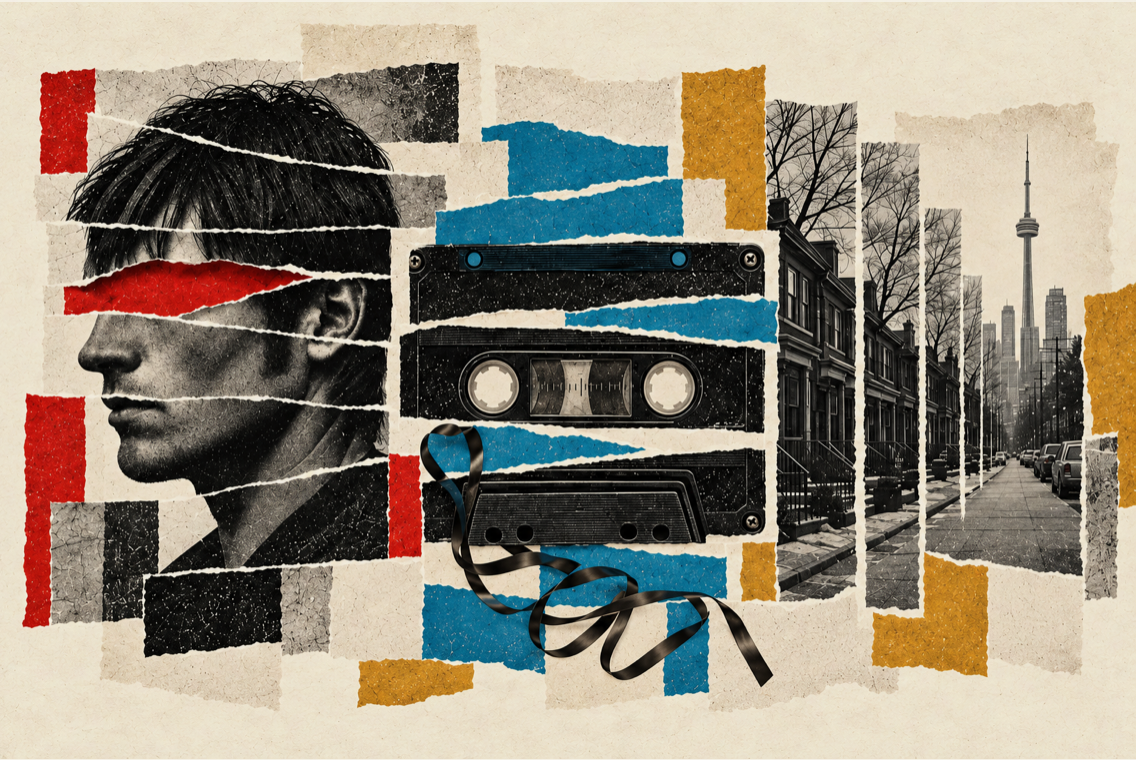
When I finished writing Meeks, I thought that was it.
I'd carried the original idea around for almost 30 years before finally sitting down to write the novel at 50. I was pleased with how it turned out, particularly the ending, which I felt offered Ranleigh something he hadn't had much of throughout the book: hope.
As far as I was concerned, I'd told the story I wanted to tell.
I certainly wasn't planning a trilogy. I wasn't even planning a second book.
In fact, when I started thinking about writing something else, it had nothing to do with Ranleigh Meeks.
I had an idea for a novel set in New York during the 1930s, involving a hospital and the early Alcoholics Anonymous movement. I started writing it and got a couple of chapters in. I thought those chapters were pretty strong.
The problem was the research.
Writing a novel set in a city I didn't know, during a period I hadn't experienced, was going to require an enormous amount of work. And the more I considered what would be involved, the more daunting it became.
So I shelved it.
Around this time, something interesting was happening with Meeks.
Readers were asking questions about Ranleigh's childhood.
The novel opens with a 13-chapter Prairie Gothic involving nine-year-old Ranleigh visiting his grandmother. But those chapters cover only a couple of days, and there's an entire childhood beyond them that the book doesn't explore.
People wanted to know more.
And their questions got me thinking.
What had Ranleigh's life been like growing up? What sort of experiences had shaped him? How had he become the man we meet in Meeks?
I'd spent years with the character, but there was still a great deal about him that I hadn't written.
That eventually led to The Ranleigh Tapes.
I didn't want to write Meeks, Part Two. I'd already told that story, and I wasn't interested in repeating myself. Instead, I wrote a novella presented as a transcription of Ranleigh completing his Fifth Step with his sponsor in a twelve-step recovery program.
It gave me an opportunity to explore his childhood and the events that shaped his life, but in an entirely different format.
And somewhere around the time I was developing that confession, I had another idea.
An idea for a third book.
It wasn't called Echo then, and I hadn't been looking for another Ranleigh story. But I could see a way to take the character further.
I won't say much about what happens in Echo. I'm still writing it, and I'd rather readers discover the story for themselves.
What I can say is that it takes place ten years after the events of The Ranleigh Tapes and will bring Ranleigh's story arc to a definitive conclusion.
Looking back, I'm struck by how little of this was planned.
I had an idea when I was 20. Eventually, it became Meeks. I thought I'd finished the story, but readers' questions prompted another book. And while working on that second book, the idea for a third emerged.
At no point did I sit down and decide to write a trilogy.
Nor do I know whether I'll write another novel after Echo. I may well do. I have other ideas, including those two chapters sitting somewhere from the abandoned New York novel. But I haven't made any decisions about that.
Writing fiction was never something I approached as a career plan. It began with one particular idea, which eventually became a character I've grown quite attached to.
And I'd like to finish his story.
That's why I'm not finished with Ranleigh Meeks.
Not quite yet.